Welcome To Our Official Website, And We Will Provide You With Excellent Service.

🌍 The Fascinating Origin of Clothing: From Survival to Self-Expression

Have you ever wondered why humans started wearing clothes in the first place? While we take fashion and fabric for granted today, the story of how clothing began is a long, complex, and deeply human one. The origin of clothing wasn’t driven by a single reason—it evolved through a mix of natural needs, social development, and spiritual beliefs over thousands of years.
Scholars generally recognize five major theories that explain how clothing first appeared. Let’s explore each of them.
1️⃣ Environmental Adaptation Theory: Clothing for Survival
At the very beginning, clothing served a purely protective function. Early humans faced harsh climates, scorching sun, freezing winds, and insect bites. To survive, they used animal skins, leaves, and bark to wrap their bodies—creating the earliest form of garments.
A famous example comes from the Ice Age, when fur was used to keep warm. Clothing wasn’t about beauty or culture yet—it was simply about staying alive.

2️⃣ Decoration and Aesthetics Theory: The Beauty Instinct
Before humans even thought about warmth, they were already decorating themselves.
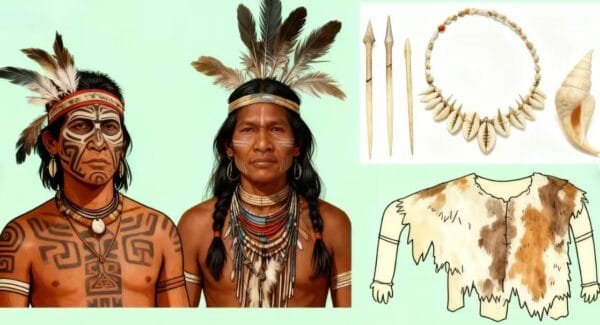
Early people painted their bodies, wore feathers, shells, and bones as ornaments. These decorations were symbols of beauty, status, and identity.
This theory suggests that the desire for aesthetic expression came first—clothing later became a new medium for humans to express individuality and creativity.
3️⃣ Modesty and Shame Theory: Covering the Body
According to this view, clothing emerged from a growing moral consciousness.
As humans evolved, they began to feel shame and modesty, leading them to cover their private parts.
However, many scholars now dispute this theory. Evidence suggests that early humans lived naked for long periods, and that feelings of shame likely developed after clothing became common—not before. Modesty may have been a social consequence, not the original cause.

4️⃣ Mate Attraction Theory: Dressing to Impress
Humans have always sought to attract attention—and clothing became one of the most effective tools for that.
According to this theory, early garments were used to emphasize gender characteristics and enhance sexual attractiveness.
Clothing and decoration helped individuals stand out, signaling health, fertility, and desirability. In this sense, ancient “fashion” was already about winning admiration and finding a mate.

5️⃣ Religious Belief Theory: Sacred Symbols and Protection
Long before organized religion, early humans believed that everything in nature had a spirit.
They wore amulets, totems, shells, and animal teeth to protect themselves from evil and misfortune. These items evolved into early forms of clothing and accessories, symbolizing a connection to gods, spirits, and ancestors.
Clothing thus carried a spiritual meaning, becoming more than just protection—it was a sacred bridge between the human and the divine.

🧥 In Summary
The origin of clothing is a story that blends practicality and spirituality.
From protection against the elements to decoration, modesty, attraction, and belief, clothing has always reflected what makes us human.
It’s more than fabric—it’s a mirror of our evolution, emotions, and imagination.
Today, whether we wear clothes for comfort, style, or status, we’re continuing a story that began tens of thousands of years ago.
How useful was this post?
Click on a star to rate it!
Average rating 0 / 5. Vote count: 0
No votes so far! Be the first to rate this post.


-35-2-768x432.png)