Welcome To Our Official Website, And We Will Provide You With Excellent Service.
Handmade Sweater Tie-Dye: Knit & Color Aesthetics
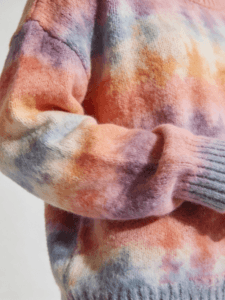
When the soft knitted texture meets lively tie-dye colors, an ordinary sweater gains unique vitality. Essentially, sweater tie-dye blends traditional tie-dye techniques with modern knitted fabrics. It not only retains the handcrafted warmth of tie-dye—where “each piece is one-of-a-kind”—but also leverages the elasticity and breathability of knitted fabrics to create more layered color gradients and blends. Moreover, from personalized streetwear designs to niche studio customizations, it has become a key technique in the fashion industry, standing out with its unique charm to showcase individuality and eco-friendly concepts.
I. Tracing the Origin: The Inheritance of Tie-dyeing Techniques and the Innovation of Sweater Carriers
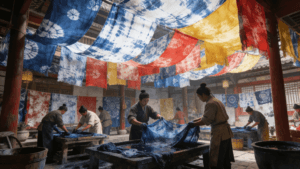
Tie-dyeing, anciently called “jiao xie”, is a traditional Chinese hand-dyeing technique. Dating back to the Qin and Han dynasties, it peaked in the Tang and Song Dynasties. Traditionally, it mainly uses plain fabrics like cotton and linen; by binding, folding or clamp-dyeing to block dye penetration, it creates varied patterns with alternating density.
However, with the development of textile technology, tie-dyeing has gradually broken fabric limitations and expanded into the knitting field, making sweaters a key innovative carrier. Unlike plain weave, sweaters’ knitted loop structure has natural elasticity and gaps.
Thus, when dye penetrates, it naturally diffuses along the loop texture, resulting in softer color transitions and more three-dimensional patterns. This combination not only revitalizes traditional tie-dyeing but also meets modern consumers’ demand for personalized, differentiated clothing, ultimately becoming a vital link between traditional handicrafts and fashion trends.
II. Core Techniques: The Five-Step Secret to Unlocking Sweater Tie-dyeing
The core of sweater tie-dyeing lies in the precise control of “tie-dyeing” and “dyeing”. It is necessary to prevent the knitted fabric from deforming during the processing while ensuring that the color presents the expected effect. The following is the core process flow of sweater tie-dyeing, covering the key steps from preparation to finished product.
1. Fabric pretreatment: Laying the foundation for dyeing
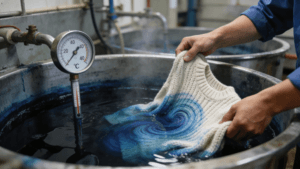
Pre-treatment is crucial for successful tie-dyeing, as its core goal is to remove surface impurities, oils, and residual sizing from sweaters, thereby boosting fabric color absorption. First, select a suitable sweater material—cotton, wool, cashmere, synthetic fibers, or blends all work, though treatment methods differ slightly by material. Then, soak the sweater in 30-40℃ warm water with a moderate amount of neutral detergent for 15-20 minutes. After gentle rubbing, rinse it thoroughly with clean water and lay it flat to dry until semi-wet; this state makes the fabric easier to shape and ensures even dye penetration.
Notably, special care is needed for different materials: animal fiber sweaters like wool or cashmere should avoid high-temperature soaking and vigorous rubbing to prevent felting and deformation. Conversely, for synthetic fiber sweaters, you can appropriately increase the water temperature to enhance their color absorption ability.
2. Creative Bundling: Create exclusive patterns
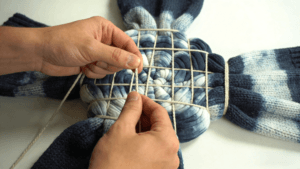
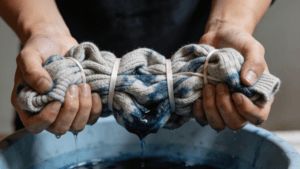
Binding is the core link that determines the shape of the pattern. Through different binding methods, various effects such as smudging, dotting, stripes, and waves can be presented. Common bundling techniques include:
- Folding and tying: Fold the sweater several times along the center line or diagonal line to form neat pleats. Tie it at different positions with cotton thread or rubber bands. The tighter you tie it, the more blank space there will be and the clearer the pattern will be. It is suitable for creating symmetrical stripes or geometric patterns.
- Twisting and binding: Start twisting the sweater from one end or the middle to form a spiral shape, and then bind and fix it at different nodes with rubber bands. After dyeing, it will present natural spiral or radial patterns, full of dynamism.
- Dyeing and binding: Use tools such as splints and clips to clamp certain parts of the sweater to prevent dye penetration, creating regular square, round or irregular block blank Spaces, which is suitable for creating simple and neat patterns.
- Random bundling: Without deliberately designing the shape, the sweater is casually rubbed and folded, then tied with a rubber band. After dyeing, it presents a natural and casual smacked effect. Each pattern is unique and full of artistic sense.
Bundling tip: The tightness of the rubber band should be moderate. If it is too tight, it may cause damage to the fabric. If it is too loose, too much dye will penetrate and the pattern will be blurred. According to design requirements, multiple binding methods can be combined on the same sweater to create a richer sense of layering.
3. Dye mixing and dyeing: Precise control of colorThe choice of dye should be based on the material of the sweater. Different materials are suitable for different types of dyes. The specific corresponding relationship is as follows:Choose the dye based on the material with the highest proportion, and the color may present a gradient effectDyeing process: Pour the prepared dye into a container, add an appropriate amount of water to dilute it (refer to the dye instructions for the specific ratio), fully immerse the tied sweater in the dye, and gently turn it over to ensure that the fabric absorbs the color evenly. The dyeing time depends on the fabric material, the type of dye and the desired color depth. Generally, it is 15 to 60 minutes. The darker the color, the longer the dyeing time.Note: During the dyeing process, avoid rubbing the sweater vigorously to prevent the knitting loops from deforming. The dyeing temperature for wool and cashmere sweaters should not exceed 40℃. For chemical fiber sweaters, the temperature should be controlled according to the requirements of the dye.
4. Color fixation and cleaning: Ensure the color lasts long
After dyeing is completed, color fixation treatment is required to enhance the color’s fastness and prevent fading during subsequent washing. The fixation methods of different dyes vary: Reactive dyes can be fixed by soaking in salt water (add 50g of salt to 500ml of clear water and soak for 20 minutes). Acidic dyes can be soaked in an appropriate amount of white vinegar (add 30ml of white vinegar to 500ml of clear water and soak for 15 minutes). Disperse dyes do not require additional fixation and can be directly washed.After fixing the color, take out the sweater, untie the rubber bands or cotton threads, and rinse it repeatedly with clean water until the rinse water is clear and free of dye residue. During the rinsing process, be gentle and avoid pulling the sweater. You can gently press to remove the water, but do not twist it.
5. Post-processing: Present the final effect Lay the washed sweater flat on a clean towel, gently press to absorb the moisture, then shape it into a flat form and place it in a well-ventilated and cool area to dry naturally, avoiding direct sunlight (direct sunlight can easily cause color fading and fabric hardening). After drying, it can be ironed at a low temperature with a steam iron as needed to smooth out the wrinkles, making the texture of the sweater clearer and the color brighter.
III. Style Characteristics: The diverse aesthetic expressions of sweater tie-dyeing
Sweater tie-dyeing, with its flexible techniques and rich color combinations, can present a variety of style characteristics, adapting to different wearing scenarios and aesthetic demands
https://www.cdgarment.com/product/new-custom-whole…tyle-plaid-skirt/
1. Retro artistic style
Using low-saturation colors (such as rose beige, off-white, and light gray), combined with simple folding, binding or dyeing techniques, a simple and elegant pattern is created. It is suitable for sweaters made of natural materials like wool and cashmere, presenting a gentle and reserved retro style overall. It is suitable for daily commuting, bookstore check-ins, coffee shop gatherings and other scenarios.
2. Street fashion style
By choosing high-saturation color-blocking combinations (such as bright yellow, royal blue, and fluorescent green), and using techniques like twisting and random bundling, exaggerated and bold, dynamic patterns are created. They are suitable for durable materials like cotton and synthetic fibers in sweaters, and can be paired with jeans, cargo pants and other items, fully showcasing a bold and individualistic street fashion sense. It is an excellent choice for young people to express themselves.
3. Natural and casual breeze
This sweater mainly features natural color schemes such as earth tones and plant colors. It adopts gradient dyeing or smudging techniques to allow for natural color transitions, with blurred and casual patterns. It is suitable for loose-fitting sweaters and is comfortable and comfortable to wear. It is ideal for casual scenarios such as outings, picnics, and home life, conveying a life attitude of returning to nature.
4. High-end customization style
Combining embroidery, beading and other techniques, secondary creation is carried out on the basis of tie-dyed patterns, or exclusive binding methods and color combinations are designed according to customer needs, suitable for high-end material sweaters such as cashmere and silk blends, to create unique high-end custom items, highlighting exclusive taste and status.
Iv. Maintenance Guide: Practical Tips for Extending the Lifespan of Tie-dyed Sweaters
The color stability of tie-dyed sweaters is relatively weaker than that of ordinary sweaters. Special attention should be paid to daily maintenance. Here are a few practical maintenance tips:
- Washing method: Hand washing is preferred. Use neutral detergent and keep the water temperature below 30℃. Avoid using strongly alkaline soaps or laundry detergents. When machine washing, put the sweater in a laundry bag and select the gentle mode to reduce fabric friction.
- Drying method: Lay flat to dry and avoid hanging to dry (hanging can easily cause the sweater to stretch and deform). Store in a well-ventilated and cool place, away from direct sunlight, to prevent color fading.
Storage method: Fold for storage and avoid hanging on hangers. Before storing, make sure the sweater is completely dry. You can put camphor balls in it to prevent insect damage (suitable for wool and cashmere materials), but wrap the camphor balls in paper towels to avoid direct contact with the fabric and discoloration.
- Dyeing treatment: Newly purchased tie-dyed sweaters can be washed separately 1-2 times first to remove any remaining floating color and prevent staining when washed with other clothes later. If it is accidentally stained, it can be soaked in white vinegar or salt in time to help remove the staining marks.
V. The perfect blend of handcrafted warmth and fashion trends
Sweater tie-dyeing is not only a dyeing technique, but also a continuation and innovation of traditional handicrafts, as well as a pursuit and expression of personalized fashion. Each tie-dyed sweater embodies the craftsmanship of the handcraftsman, featuring unique patterns and colors. It breaks the homogenization deadlock of industrial production and makes clothing a carrier for conveying emotions and aesthetics.
https://chinese.alibaba.com/product-detail/Stylish-Men-s-Winter-Fashion-100-1601426028276.html?chatToken=TDFKeWNGRlpkWFZTWmtkNFRYRnZjVWxhVTBsU2RVcHNkRVpKVTJsMlRteERiM0ZyWlhrM2VHMXhZM1psZVVOcFdVWkljWFpqUkc0eVlqZG1VbmxsU25sdVJHWmhSRFpsUVZwUFV6WkxPVTh4VFZSUlZXeFZha1ExVjAxbWFYUXpPV1Z2VWt4VVJYRllRME5vY2pCM1VEYzFRMVJMVEc5cldWTlpWRlZITlhCdkx6QTBiM1ZCV2pBek1sRlBLME5xWjFFeVIyWXlRbms0TlhRM0swOVViRzlZVERaYVZYRjZialZWUFE9PSZ2ZXJzaW9uPTIuMC4w&encryptTargetLoginId=8pctgRBMALOA4xPaUt76xD6hRzabja%2Fs9V%2FgJ%2BXYVIQ%3D
-35-2-768x432.png)