Welcome To Our Official Website, And We Will Provide You With Excellent Service.

The Real Reason Sample Fees Exist—Factories Finally Speak Out

It’s Just One Sample… So Why Does It Cost Money? Here’s the Answer.
In manufacturing industries like clothing, footwear, bags, and home textiles, “sample making” is a crucial process. Many clients feel confused when they receive a sample fee: “It’s just one sample—why charge for it?” Some even think it’s a factory’s way of secretly raising prices. Today, from a factory’s perspective, we’ll break down the real reasons behind sample fees and uncover the “cost secrets” hidden beneath.
1. Sample making isn’t “just making one product”—it’s a mini version of the full production process
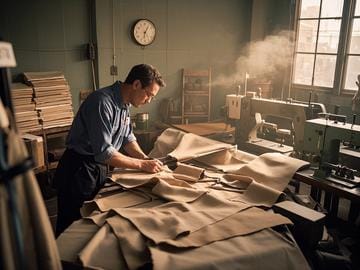
Many people mistakenly believe sample making is simply “turning a design into one finished item.” In reality, it’s the key bridge between a design draft and mass production. It covers design analysis, pattern making, fabric sourcing, accessory matching, cutting and sewing, process adjustments, quality inspection, and more—almost replicating every step of mass production. A high-quality sample often requires collaboration between experienced pattern makers, sewers, and process engineers, taking days or even weeks to complete.
2. High labor costs—professional skills are irreplaceable
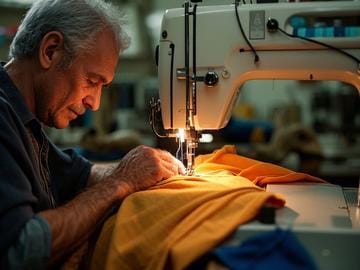
Sample making demands top-tier technical skills. Pattern makers must create precise patterns from designs, considering ergonomics, fabric properties, and sewing shrinkage. Sewers need to handle details with special techniques, such as pleating, splicing, or embroidery. Process engineers evaluate mass production feasibility and offer optimization suggestions. These are all highly skilled roles, with hourly costs far higher than regular production line workers. A single sample often involves multiple people working together, adding up to significant labor hours.
3. Material costs are real—and mostly small-batch purchases
Fabrics and accessories (zippers, buttons, interlining, etc.) for samples usually need to be purchased separately, so factories can’t get bulk discounts. Small-batch purchases mean higher unit prices. Some special fabrics even need to be sourced from other cities or countries, increasing logistics costs. Additionally, sample making often involves trial and error—like redoing a pattern that doesn’t fit or wasting fabric that doesn’t work. All these costs must be covered.
4. Equipment depreciation and energy consumption can’t be ignored
Professional equipment used in sample making—such as automatic cutting machines, sewing machines, overlockers, and ironing tools—incurs depreciation and maintenance costs. Meanwhile, energy consumption (water, electricity, steam) is also a real expense. While the energy used for one sample isn’t high, it adds up to a significant cost over time.
5. Sample making is a “risk investment”—factories bear failure costs
Samples don’t always work on the first try. Clients may request revisions to the pattern, color, or texture, requiring factories to adjust repeatedly or even remake the sample. Each revision means additional labor, materials, and time costs. More commonly, clients may decide not to proceed with mass production or switch to another factory—leaving the factory’s sample investment wasted. Factories usually bear these risks alone.
6. Fees filter serious clients and avoid resource waste
In the industry, there are “sample-only clients” who get free samples to steal design ideas or compare prices but never place orders. If samples were free, factories would be stuck in endless unproductive work, seriously disrupting normal production schedules. A reasonable fee not only respects the factory’s labor but also effectively filters sincere clients and ensures cooperation quality.
7. Sample fees are refundable—showing the factory’s sincerity
It’s worth noting that most formal factories offer “deductible” sample fees. That is, once a client confirms a mass production order, the sample fee can be fully or partially deducted from the total payment. This reflects the factory’s willingness to cooperate and balances the interests of both parties.
Conclusion
Sample fees aren’t a “barrier”—they’re a respect for professionalism, time, and costs. Behind them lies the factory’s commitment to quality, dedication to craftsmanship, and sense of responsibility to clients. Understanding the true value of sample making helps build healthier, more sustainable cooperative relationships between suppliers and clients.
Next time you receive a sample quote, remember: it’s not just a bill—it’s a “prequel to product birth” filled with craftsmanship and hard work. Choosing a factory that invests in sample making and dares to charge for it often means you’re one step closer to high-quality mass production.




How useful was this post?
Click on a star to rate it!
Average rating 0 / 5. Vote count: 0
No votes so far! Be the first to rate this post.
-35-2-768x432.png)